

First, Judas
Judas is the bad guy. But is he really? Think of your worst enemy. Would you put your worst enemy in charge of your personal finances?
He said this, not because he cared about the poor, but because he was a thief, and having charge of the moneybag he used to help himself to what was put into it. (John 12:6. ESV)
Yes, he’s still the bad guy. However, he did handle the money for Jesus and his 12 friends. One of the reasons why we see Jesus as a homeless nomad is because of the lifestyle He and his friends seem to have had. The Bible tells us that Peter, Andrew, James and John were fishermen. Matthew was a tax collector. Luke 5:11 tells us that Jesus’ followers “left everything and followed Him.” I assume that means they also left their jobs. Judas was the one who Jesus assigned to handle their collective money to fund the lifestyle and ministry of these 13 people. Imagine if you and your friends could get up and go where you wanted when you wanted. Also, imagine that you have a friend along with you who is your personal treasurer.
The ancient world didn’t function economically like ours does today. The majority of people didn’t carry money around with them. They also weren’t paid on a regular basis like we are now. People would be paid when they sold something, like during harvest time. Or they would barter and trade. If a person earned a salary, they would be paid in a few large installments over the course of the year. Perhaps quarterly. A Roman soldier for instance would be paid 75 denarii three times yearly. People would budget their daily, monthly and yearly expenses to account for being paid irregularly. This meant that a person’s wealth was not in a bank account.
Most people’s wealth was in what they owned, like livestock and property. For instance, at that time, an entire city would collectively own two oxen. The people of the city would share these oxen to take care of their land and farm for the year. People did have coins and tangible money, but most people did not carry it around with them. If a person regularly carried a money bag with them, it would have been because they were wealthy. Almost no one carried currency on a regular basis. In addition, if Jesus was poor, do we think that He could have afforded Judas to “help himself” to whatever was in the bag? It is true that Jesus knew that Judas was stealing, but if Judas was able to have that level of freedom with Jesus’ money, and Jesus and his friends were still able to do everything they needed to do without ever having an issue we know about, it is most likely because Jesus had plenty of it.
Jesus’ clothes
“23 When the soldiers had crucified Jesus, they divided his clothes among the four of them. They also took his robe, but it was seamless, woven in one piece from top to bottom. 24 So they said, “Rather than tearing it apart, let’s throw dice for it.” This fulfilled the Scripture that says, “They divided my garments among themselves and threw dice for my clothing.” So that is what they did.” (John 19:23-24, ESV)
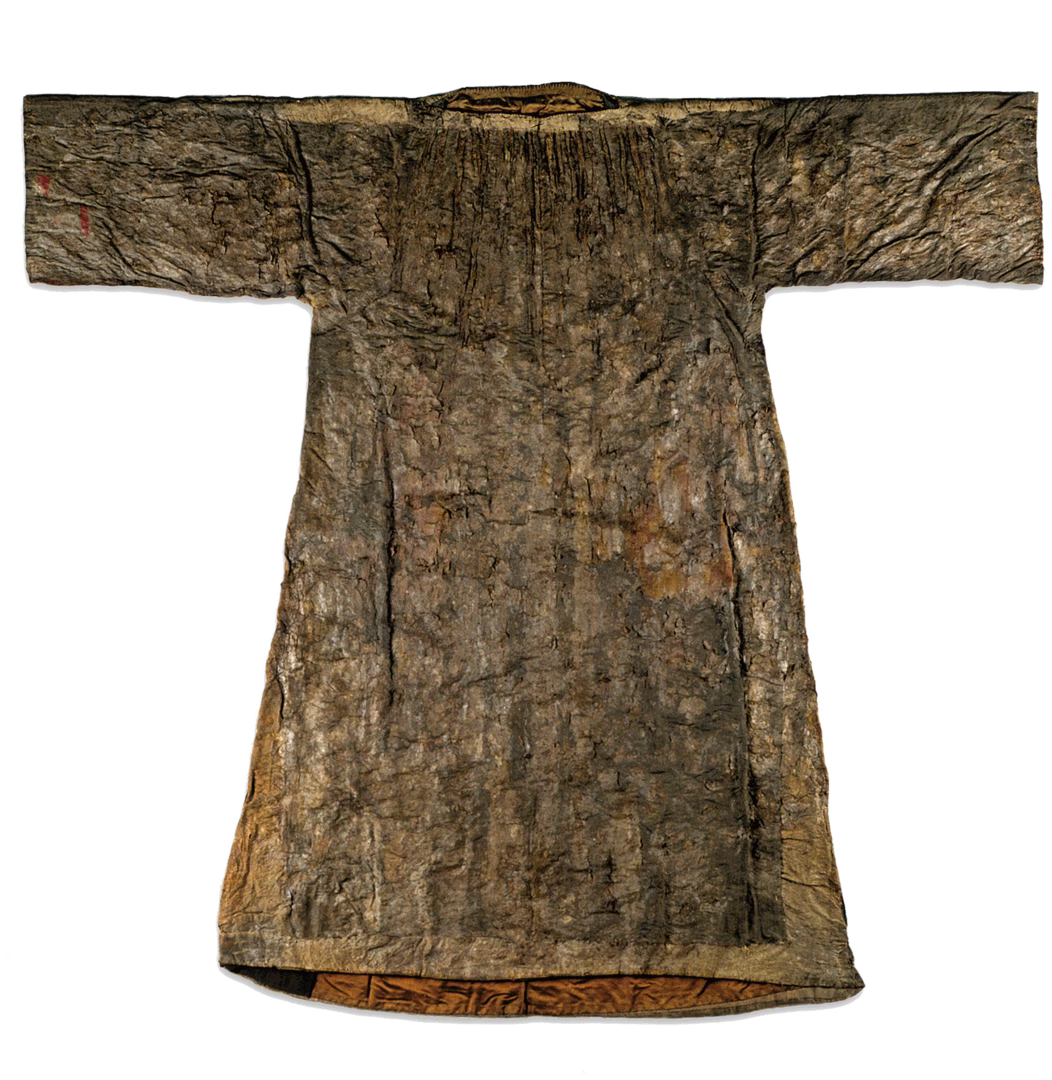
Why does John go into such detail to describe Jesus’ tunic? In the ancient world, people would usually wear three different pieces of clothing. A loincloth, like underwear. An inner tunic and a large outer cloak like a jacket. Jesus’ inner tunic was what the soldiers were gambling over. These Roman soldiers weren’t gambling over Jesus’ tunic because he was the Son of God. They didn’t care about who He was, this wasn’t a religious relic to them. Why would they gamble over who got to keep a used piece of clothing from a man who for all they knew, was just another criminal they were executing? These soldiers gambled over Jesus’ tunic because it may have been the most expensive piece of clothing they had ever personally seen.
A standard tunic, woven out of two pieces of fabric in the Roman Empire in the first century could cost anywhere between 4-6 denarii (Source). It is hard to estimate how much Jesus’ seamless tunic would have cost. On the low end, we can estimate that a tunic would have cost between 10-20 denarii (Source). On the high end, a soldier’s tunic - one of the nicest that a common person could buy - would have cost 75 denarii (Source). Given that the soldiers were gambling over Jesus’ tunic, it can be assumed that it was nicer than their 75 denarii tunics. How much would Jesus’ tunic be worth in today’s money? Let’s look at household income one more time. A soldier would make 225 denarii yearly. The median American household makes $80,610. If a soldier purchased a tunic for 75 denarii, that would be equivalent to ⅓ their yearly salary, or $26,870 in today’s money. That’s how much the tunic would be worth if it cost the same as a soldier’s tunic. What if it was worth 10-20 denarii? That would mean on the low end, Jesus’ tunic would be somewhere in the $730-$7010 range. On the high end? Some historians say that Jesus’ tunic likely would have cost 100 denarii. 44% of a soldier’s yearly income, or $35,468 in today’s money.
I don’t know how you picture Jesus or his life on earth. But when we start to study his material position while He was here, we get a considerably different picture than what many of us have understood or been taught. Do we know if Jesus was materially prosperous on earth for sure? Of course not. If we follow the evidence and study the history, it is pretty difficult to believe that he wasn’t.
It’s astounding to me that the average home would have been around 200 sq ft. This is both hard to relate to by experience and also humbling. We’ve fallen so far into life of leisure and ingratitude. Helps to reframe the blessing of modern life and put it into perspective.
Great read, Josh!